
As an Amazon Associate, we earn a small commission from qualifying purchases — at no extra cost to you.
Not sure which sewing needle to use? This guide breaks down types, sizes, and the best needle for every fabric.
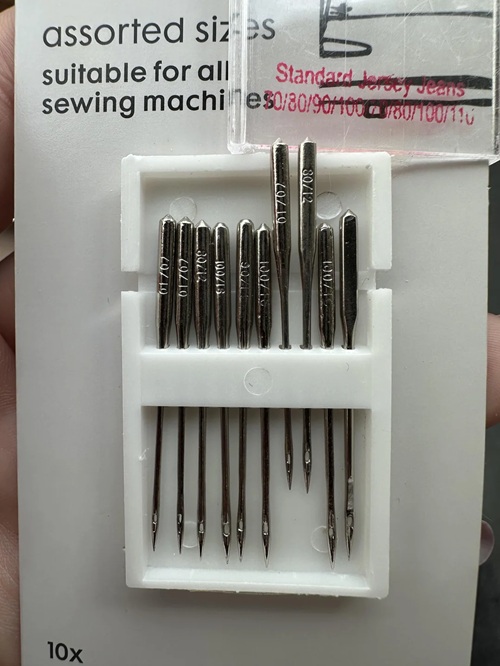
Choosing the right needle is another simple technique that helps make stitches perfect; however, many people overlook it. An incorrect needle can cause skipped stitches, thread breakage, fabric ripping, or even a bent needle, while the right one makes everything easier.
Why Choosing the Right Needle Matters
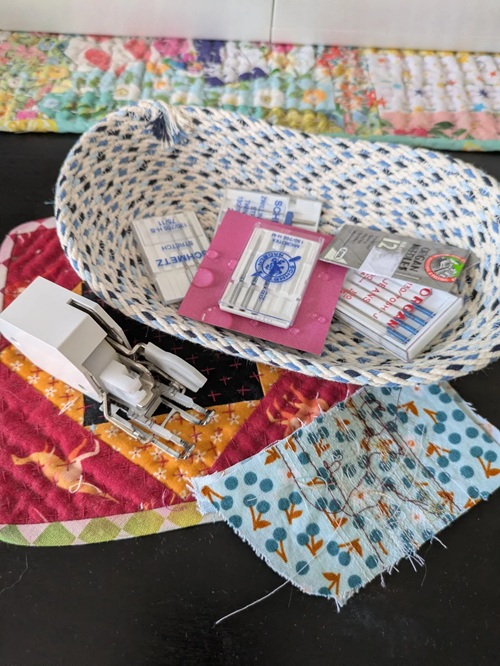
The needle is where thread and fabric meet; as such, choosing the right needle affects nearly every aspect of the stitch. The use of the right needle will ensure:
- Even and uniform stitches: a properly sized needle allows thread to pass through fabric easily without any pulling or bunching.
- Protection of the fabric: a similar point ensures no unnecessary punctures, snags, or runs.
- Minimizing skipped stitches and thread breakage: an inappropriate needle size creates high resistance and improper stitch formation.
- Protecting your machine: an inappropriate needle for heavy fabrics can bend or break easily.
Simply put, choose the right needle and size for the fabric and thread you’re using. This small detail has a huge impact on the final product.
Needle Point Types: The Part Most Guides Skip
Before you choose, understand why different needles work for different fabrics. It all comes down to the shape of the needle’s point.
| Point type | How it works | Best for |
|---|---|---|
| Sharp/Universal | Slightly rounded, general-purpose point | Most woven fabrics (cotton, linen) |
| Microtex (Sharp) | Very slim, extra-sharp point | Fine, tightly woven fabrics like silk, microfiber |
| Ballpoint | Rounded tip that slides between fabric loops instead of piercing them | Knits, jersey |
| Stretch | Similar to ballpoint but with a special eye/scarf to prevent skipped stitches | Spandex, elastane, swimwear fabric |
| Jeans/Denim | Strong shaft, very sharp point | Denim, canvas, heavy twill |
| Leather | Wedge-shaped cutting point | Leather, suede, vinyl |
Understanding Sewing Needle Sizes
Sewing needle sizes indicate the needle’s thickness. This makes it easier to choose the right sewing needle size for the fabric you want to sew. Sewing machine needles may be numbered 70/10, 80/12, and 90/14.
This numbering system uses two parts. One is European/metric (for example, 80), and the other one is American (for example, 12). Both these numbers refer to the same sewing needle.
You can use either one, or both, on the sewing machine. It is usually true that the smaller the number, the thinner the needle; and the larger the number, the thicker it is.
Common Sewing Needle Sizes
| Size range | Best for |
|---|---|
| 60/8 – 70/10 | Very lightweight, delicate fabrics |
| 75/11 – 80/12 | Lightweight to medium-weight fabrics |
| 90/14 | Medium to heavier fabrics |
| 100/16 – 110/18 | Heavyweight fabrics: denim, canvas, upholstery |
Sewing Needle Guide by Fabric Type
Choosing the right sewing needle for the fabric type is one of the easiest ways to improve your sewing skills. Different fabrics have their own characteristics, such as weight, thickness, elasticity, and weave. Below is a small guide to selecting the needle type.
1. Cotton
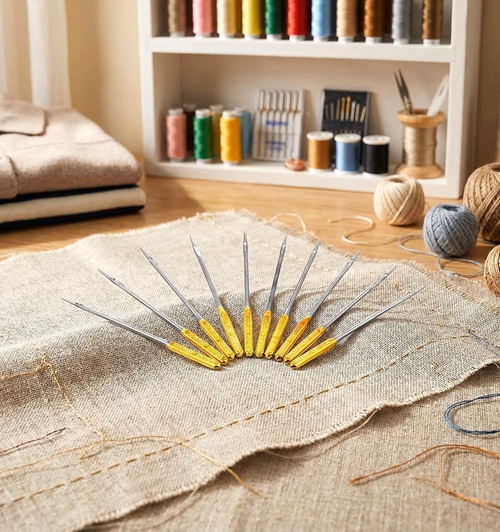
The most common fabric weave type, and it usually does a good job with universal needles. For fine cotton, use a fine needle like 70/10 or 75/11; for medium cotton, use an 80/12 needle.
Best needle: Universal
Suggested size: 70/10–80/12
2. Linen
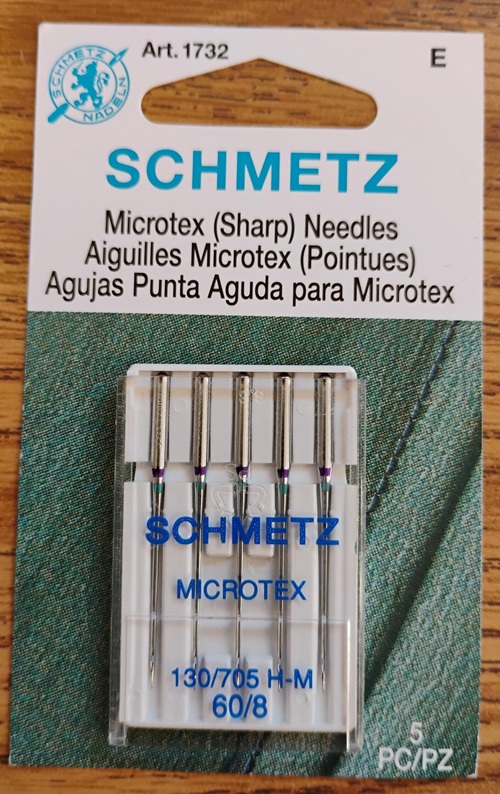
Available in lighter and heavier versions, so choose a needle based on the linen’s weight. You can use either a universal needle or a Microtex needle.
Best needle: SCHMETZ Microtex
Suggested size: 70/10–90/14
3. Silk
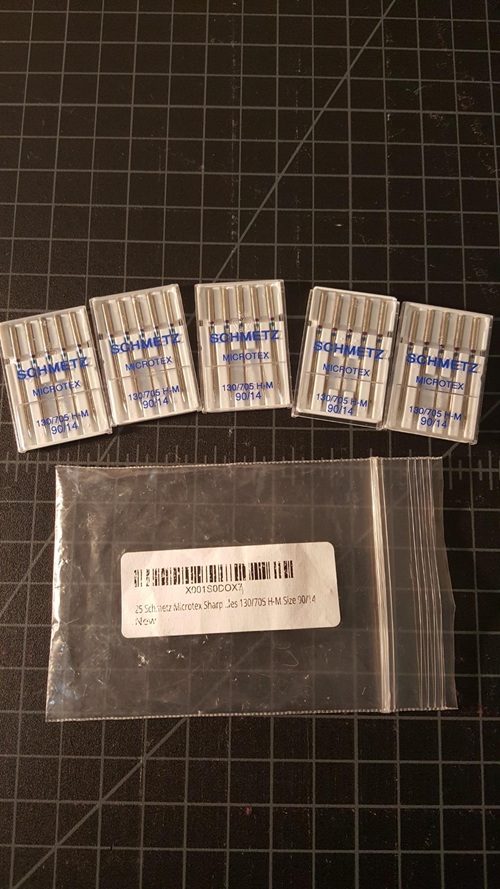
It is very delicate, and needle marks show easily. It would be best to employ the very fine and sharp Microtex needle, which produces very tiny marks.
Best needle: SCHMETZ Microtex Sharp Sewing Machine Needles
Suggested size: 60/8–70/10
4. Chiffon and Other Sheer Fabrics
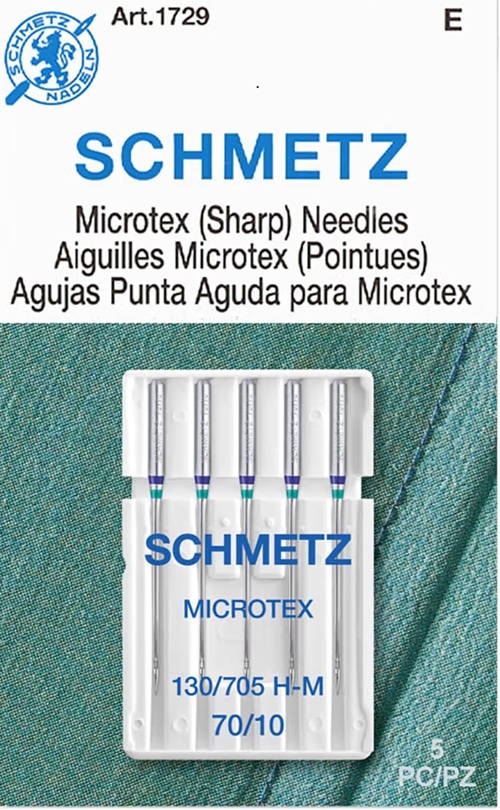
For instance, fabrics such as chiffon, organza, and voile require a needle that is small and sharp. Using large needles can cause holes or puckering.
Best needle: Microtex
Suggested size: 60/8–70/10
5. Jersey and Knit Fabrics
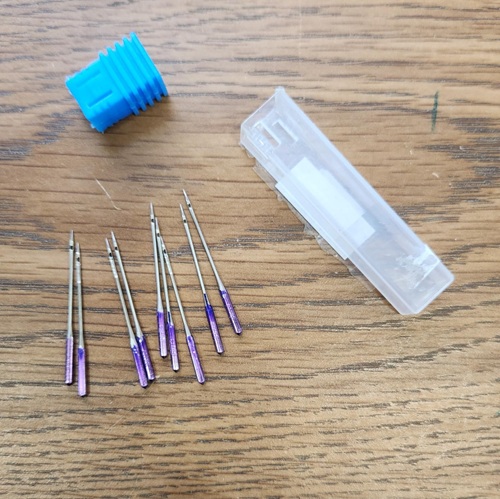
In knit fabric, loops form that a pointed needle can readily pierce. The ballpoint needle slides seamlessly through the loops, whereas the stretch needle is ideal for elastic knit fabric.
Best needle: Ballpoint or Stretch
Suggested size: 70/10–90/14
6. Stretch Fabrics
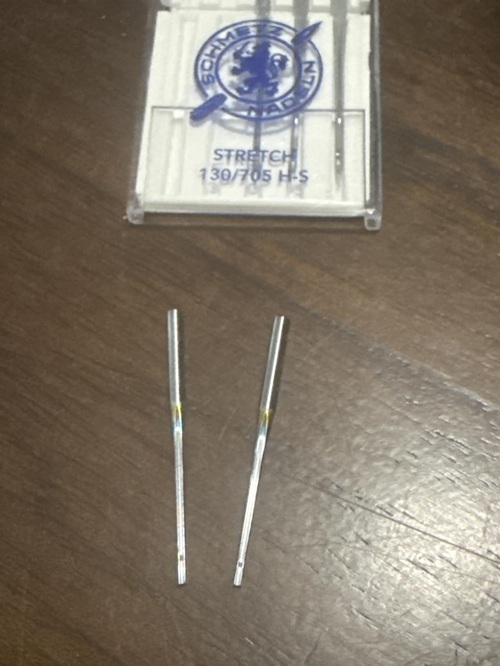
Use needles that move with the fabric without creating skipped stitches for materials that contain spandex or elastane. These are known as stretch needles.
Best needle: Stretch
Suggested size: 75/11–90/14
7. Denim
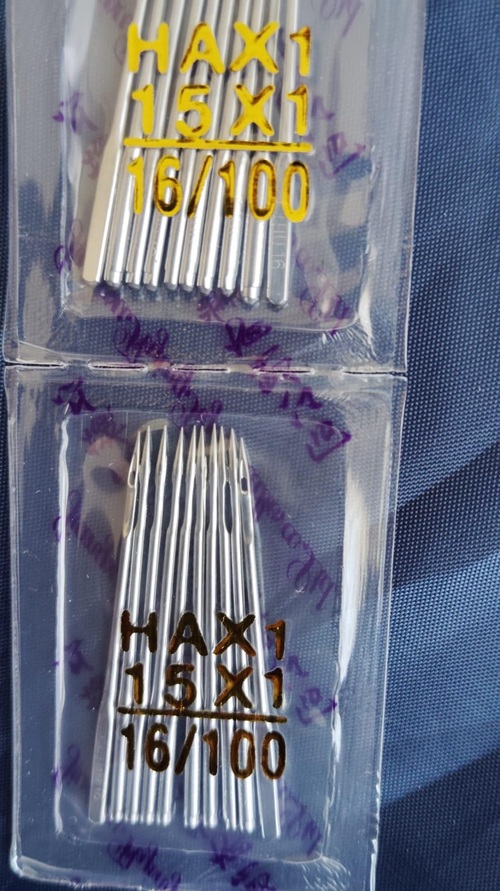
Denim fabric is dense and firmly woven; a standard thin needle will bend or break easily. Denim/Jeans needles have a robust shaft and a pointed tip to penetrate dense fabrics.
Best needle: Jeans/Denim
Suggested size: 90/14–110/18
8. Canvas
Canvas is a sturdy fabric often used for bags and interior decorations. It’s best to use a strong Jeans/Heavy Duty needle when sewing canvas.
Best needle: Jeans/Heavy-Duty
Suggested size: 90/14–110/18
9. Leather
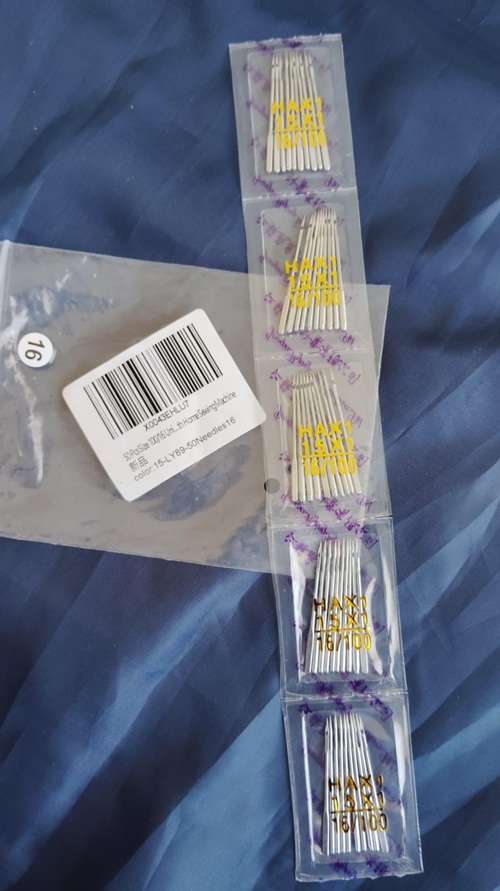
It needs a special needle since it is not a fabric like woven or knitted material. A leather needle has a wedged point, which makes it easy to go through the material.
Best needle: Leather
Suggested size: 80/12–110/18
Both needle type and size matter, but the size should suit the fabric weight and thread. However, the needle tip shape affects how it interacts with the fabric structure, while size matters mainly for fabric weight. It is wise to keep this list at hand.